Clothes organizer ideas can turn a cluttered closet into a more useful and organized space. When clothes are piled on shelves or stuffed into drawers, finding what you need becomes frustrating.
Simple solutions like shelf dividers, slim hangers, and under-bed storage can help you use every inch wisely. This guide shares 15 practical ways to organize everyday and seasonal clothing. You’ll also find easy tips for storing bulky winter clothes without taking up too much space.
1. Use Vertical Space With Shelf Dividers
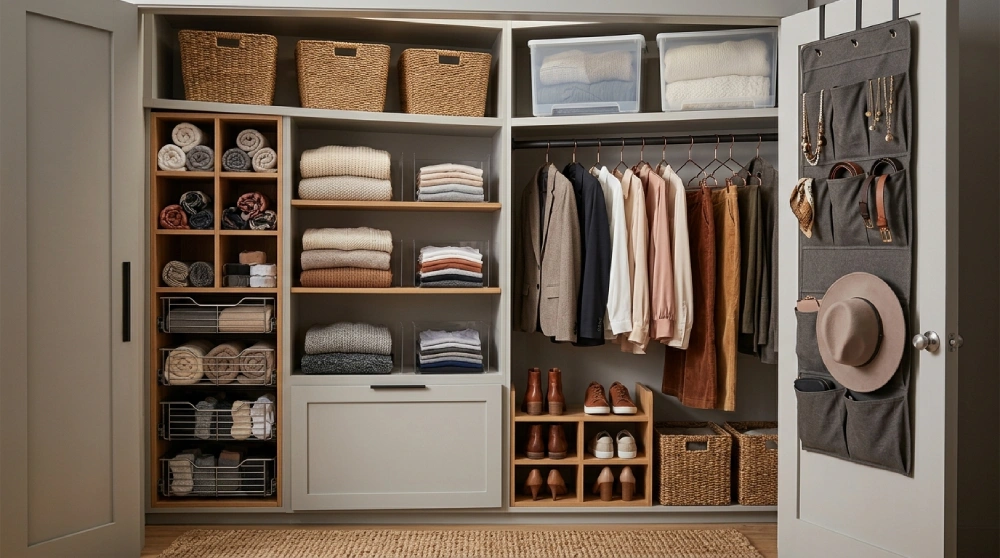
Closet shelves usually have empty space above folded clothes. Create shelf dividers that can be used to create separate sections of clothes, sweaters, shirts or other accessories.
This method is particularly effective for clothing that is on shelves since the stacks remain standing up instead of leaning against one another. It makes it much easier to move one item without causing a disturbance to the whole pile.
2. Add Hanging Organizers
Hanging shelves can transform one clothing rod into a variety of levels of storage. They can be useful for folding handbags, T-shirts, scarves, sweaters with a lightweight design and other things which do not require hanging.
Fabric hanging organizers are especially useful in rental homes as it generally requires only a few or no installation at all.
3. Install a Second Hanging Rod
If your closet isn’t tall enough to be tall, think about adding another hanging rod to the left of the one you have. Make sure that shorter clothes like skirts and shirts go to the lower floor while larger things are stored above.
This small change can help make more efficient usage of space vertically, and also help maximize the space in your closet without increasing the size of the closet.
4. Try Slim, Matching Hangers
Large hangers can take up an enormous amount of space. The slim hangers let clothes be hung closer and give an overall appearance.
Choose sturdy hangers for coats and heavier clothes, while lighter alternatives can be useful for dresses and shirts. Do not pile clothes on shelves of each other as clothes require sufficient space to remain easily accessible.
5. Store Clothes Under the Bed
The area under your bed is a great storage space. Use it to put low profile containers or zip lock bags with clothes that you don’t need to use all the time. A clothes organizer can help with this storage system.
6. Rotate Seasonal Clothing
A closet that houses every piece of clothes in the primary closet throughout the year could cause chaos. It is better to separate your everyday clothes from seasonal clothes storage.
During the warmer months, keep coats, sweaters that are thick, as well as thermal layering away. As temperatures drop then, you can bring them back and keep summer clothes in separate storage. This type of seasonal rotation makes the wardrobe in order.
7. Fold Winter Clothes Correctly
When it comes to storing winter clothes, make sure that you save them in a dry and clean space. Do not hang the sweaters but, instead, fold them, as the heavy ones would make your shoulders look wider over time.
In order to properly store winter clothes, try to come up with some storage options. You may want to use the breathable bags, something heavy-duty like that, or a convenient closet. It is better not to fill the storage bag too much, as it would lead to fibers breaking and clothes losing their shape.
8. Use Vacuum Bags Carefully
Vacuum storage bags are a great way to reduce the weight of bulky objects like puffer jackets, blankets, and seasonal clothes. They can be useful in situations where closet space is small.
But, not all fabrics are suitable for compression over a long time. Make sure you read the instructions for care before making use of vacuum storage, particularly for fragile or structured clothing.
9. Add Drawer Organizers
Drawers get messy when smaller clothes are thrown together. Dividers that can be adjusted to be used to separate underwear, socks and belts, gym clothes or other accessories.
Instead of putting everything into one big compartment, make smaller pieces that allow each category to spot.
10. Use the Back of the Closet Door
The rear of a closet’s doors can be used to store additional items without taking the flooring space. A door organizer that is over the door can store belts, scarves, handbags or hats. It can also be used to fold accessories.
Renters seeking solutions for organizing their closets in apartments could be a viable option since the majority of door organizers do not require constant changes.
11. Organize Clothes by Category
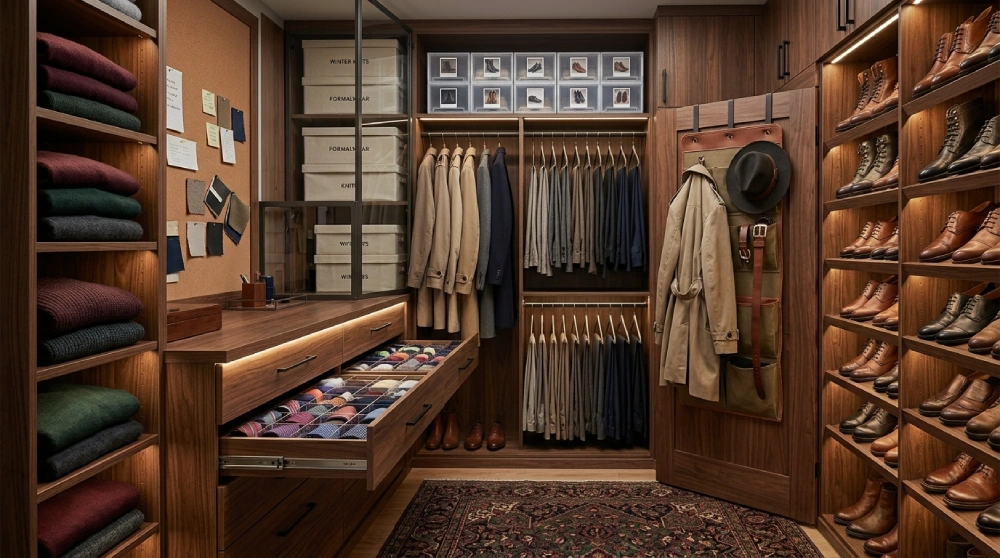
A simple categorical division will help to make the wardrobe more convenient to use. For instance, it might be possible to keep the same clothes and separates, as well as formal wear, in separate categories.
It is also possible to go further and sort the items by color in each category to be able to quickly locate the clothing that is needed.
12. Use Clear Storage Containers
Clear containers let you look inside without opening each box. They are ideal for seasonal clothes and accessories that can be kept for a long time.
Include simple labels too. Labels such as “winter sweaters” or “summer accessories” will save you the time needed later on.
13. Create a Small Closet Zone
If you’re thinking about how to organise a small closet, begin by splitting the space into zones. A clothes organizer can help with these zones. Place items that are frequently worn close to the eye and put items that are not used more or further in the back.
A functional layout could be like this:
- All day shirts at eye level
- Skirts and trousers underneath or in front of them
- Small bins for accessories
- Seasonal clothing storage is on the higher shelves
- Shoes placed on a lower rack
14. Make a Small Walk-In Closet Work Harder
The main idea on arranging a walk-in closet is to use all the available surfaces but not overfilling. It would be great to use the corners to create shelves or use narrow baskets with two hangers each and some drawers.
Another thing that might help is using the clothes organizer to split the whole space into smaller sections that would make a more organized look.
15. Remove Clothes You No Longer Wear
Even the top clothes organizer can’t solve a storage issue if your closet has too many items. Check your closet regularly and sort your clothing into four categories which are: donate, keep repair and recycle.
Consider whether you wear the items, if it is comfortable and like to wear it again. By removing clothing that you don’t use, you can create space, without the need to purchase additional storage solutions.
A Simple Way to Build Your Storage System
If your closet seems overwhelming, don’t try to reorganize it all at once. Take these actions:
- One section empty: Start with a shelf, drawer, or hanging space.
- Sort clothing: Group similar items together.
- Take out any unwanted pieces: Set aside clothing that is needed to donate, repair or recycle.
- Take measurements of your space Verify the height of shelves length, rod length, as well as the floor space available before purchasing organizers.
- Choose the appropriate storage option: Make use of shelves for folded clothes, rods to hang garments, and containers to store seasonally-appropriate items.
- Labels stored products: This is particularly useful when you are using transparent boxes.
- Keep the system running: Each item should be returned back to the place it was placed after use.
Conclusion
A packed wardrobe doesn’t necessarily mean that you need to have a larger closet.With the proper clothes organizer for clothes the vertical space under-bed, door, or shelves can be used for storage. Separating seasonal clothes can simplify your life and simplify your wardrobe.After your system has been set up, keep it simple enough to be able to maintain it with no extra effort.
Frequently Asked Questions
What is the best clothes organizer for a small closet?
The ideal solution depends on the things you’ll need to keep. A slim hanger, hanging shelves, shelving dividers, shelf shelves, and door organizers are great to maximize vertical space.
How can I maximise closet space without remodeling?
Begin by making use of vertical space, and reduce the bulky storage objects. Include a second hanging rod and slim hangers, shelves separators, and door-to-door organizers.
How should I store winter clothes?
Before placing winter clothing in storage, clean or wash them in accordance with their care labels, and ensure they are dry. Take heavy sweaters off and place them in ventilated containers or appropriate storage bags.
Are vacuum bags good for seasonal clothing?
Vacuum bags are useful for the storage of large items of bedding and clothing that do not have enough room, but there are certain exceptions. It is important to check the washing instructions of the clothing before you put your clothing in a vacuum bag for storage.
How do I organize a small walk-in closet?
To learn how to arrange a walk-in wardrobe efficiently, you should divide the closet into areas based on what kind of clothes you wear and how often you will use the items.
What should I keep on closet shelves?
Closet shelves are great for folded jeans, T-shirts bags, sweaters, towels and many other things that don’t need to hang. Make use of baskets or dividers to prevent stacks from growing and to make categories more accessible.
How can I organize clothes in a rental apartment?
Renters can make use of removable and freestanding solutions like hanging hangers, thin organizers storage bins, containers for underbed storage, and racks that can be hung over the door.
Should clothes be folded or hung?
It’s dependent on the style of clothing. Jackets, dresses, shirts and a variety of trousers can be hanged, however sweaters and knits with a heavier weight tend to be folded.
How often should I reorganize seasonal clothing?
A review of your seasonal wardrobe twice per year is a good beginning point. As the weather shifts, bring the clothes you are planning to use into your regular wardrobe, and then move the less important items into seasonal storage.
Does a wardrobe organiser really save space?
Yes, I think a clothes organizer saves space by organizing the clothing into smaller sections. The most beneficial outcome is being able to see what you have clearer and having it easier to access, not necessarily creating additional storage space.