The kitchen cabinet refacing process can update the look of your kitchen without completely replacing the existing cabinets. The cabinet boxes stay in place while new doors, drawer fronts, finishes, and hardware give the kitchen a fresh appearance.
Regular maintenance can help keep Refaced Kitchen Cabinets looking fresh and working properly for years. Simple cleaning habits, careful everyday use, and routine maintenance can help protect the new finish from grease, moisture, scratches, and normal wear.
How Should You Clean Refaced Kitchen Cabinets?
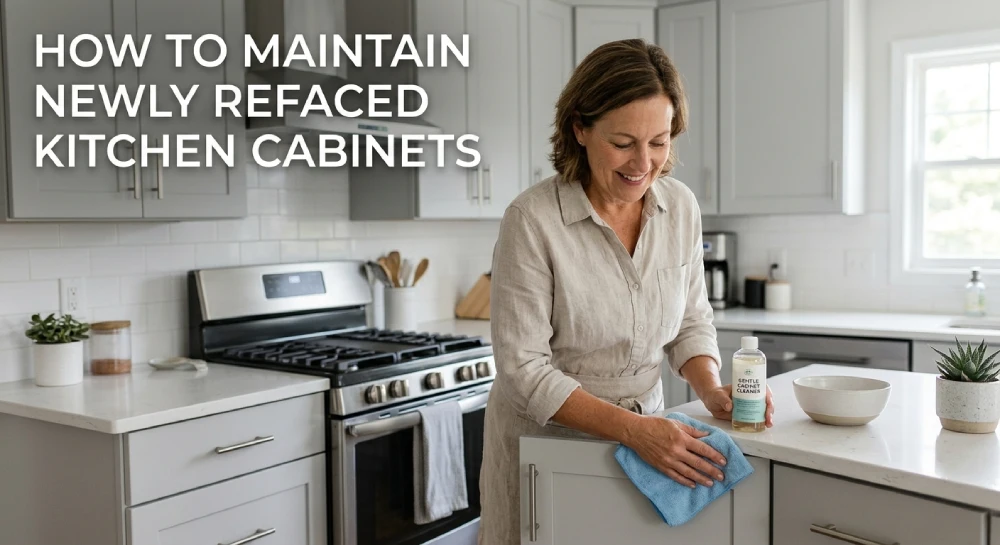
One of the most effective ways to protect your Refaced Kitchen Cabinets is through regular cabinet cleaning. Fingerprints, dust, moisture, food splashes, and cooking grease can build up on cabinet surfaces during everyday use. Cleaning these areas regularly makes it easier to prevent buildup and keep the finish looking its best.
For routine cleaning:
- Wipe cabinet surfaces with a soft, slightly damp cloth.
- Clean food and liquid spills as soon as possible.
- Use a mild cleaner when necessary.
- Dry the surface after wiping.
- Avoid spraying large amounts of cleaner directly onto the cabinets.
Always consider the cabinet material and finish when choosing cleaning products for cabinets. Abrasive cleaners, steel wool, rough sponges, and strong chemicals can scratch or dull some surfaces. A soft microfiber cloth and a cleaner recommended for the specific cabinet finish are usually safer choices.
What Is the Best Way to Care for Refaced Cabinets?
Good cabinet care involves more than simply wiping the doors. Keep cabinets as far removed from anything which may cause them to wear out early, such as excessive moisture, heat and impacts.
Specially focus on the regions close to the sink, dishwasher and cooking range. Over time, cabinet materials can be damaged by water and steam, particularly if moisture is allowed to accumulate on the surface or edges of the cabinets.
When refacing cabinets, the material used for the new exterior also affects how the cabinets should be maintained.. For instance, laminate cabinet doors typically can be easily wiped clean, but require careful cleaning to avoid damaging the cabinet’s finish.
Keeping wet towels hanging over cabinet doors or wet objects touching cabinet surfaces is also beneficial. Little things such as these can ensure that the new finish stays well maintained.
How Can You Protect Cabinet Doors and Drawers?
Your cabinet doors and drawers are used a lot, and thus endure more wear and tear. Don’t push or drop them or put too much weight on them when placed in drawers.
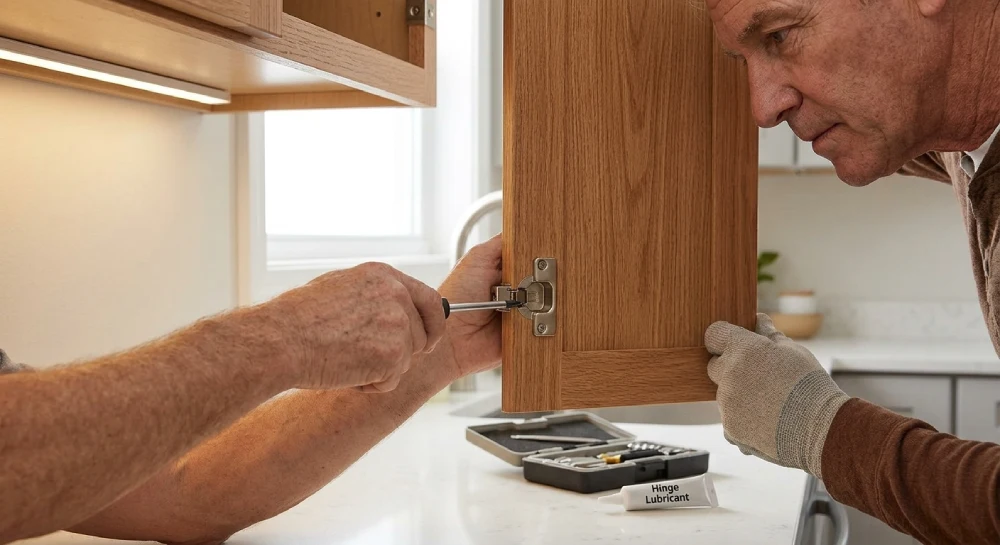
Inspect hinges, handles and drawer slides periodically. Early corrections of a realigned door or sticking drawer will prevent further wear.
Modern cabinet knobs and pulls can be used to replace old hardware. New hardware will enhance the new cabinetry finish and add a few more design improvements to the kitchen. When installing new hardware, be sure to install it securely, not over-tightening the hardware screws or they may damage the surrounding material.
How Often Should Kitchen Cabinets Be Maintained?
A simple routine makes kitchen cabinet maintenance much easier. Handles and cabinet doors close to the stove are some areas that may require cleaning more often than less frequently used cabinets.
A basic routine can include:
- Wiping cabinet doors weekly or as needed.
- Removing grease buildup before it becomes difficult to clean.
- Checking for loose hinges and hardware.
- Cleaning around cabinet edges and corners.
- Looking for moisture near sinks and appliances.
- Addressing small scratches or damage early.
Regular maintenance does not need to take a lot of time. Spending a few minutes each week on basic cleaning can help prevent larger problems later.
Can Refaced Cabinets Stay Durable for Years?
Yes. With consistent cabinet maintenance, properly installed refaced cabinets can remain attractive and functional for many years. The lifespan is dependent upon the quality of materials, installation, kitchen environment and frequency of use.
When you’re thinking about refacing, check out materials, adhesives, finishes and maintenance before you start. When it comes to maintaining their kitchen cabinets, it will be easier when you have chosen durable kitchen cabinets and then you have followed the recommended care routine.
Also, keep in mind that refacing will improve the appearance of your cabinets but will offer no structural reinforcement to the cabinets. It is important that the current cabinets are fixed if they are severely damaged by water or structurally sound before or during the project.
Frequently Asked Questions
How do you clean refaced kitchen cabinets?
Use a soft, slightly damp cloth and a mild cleaner suitable for the cabinet finish. Remove spills quickly and dry the surface afterward.
Can I use household cleaners on refaced cabinets?
Some household cleaners may be too strong for certain finishes. Check the manufacturer’s recommendations before using chemicals or abrasive products.
How often should I clean my kitchen cabinets?
Frequently used cabinets should be wiped regularly, while a deeper cleaning can be done as needed based on grease, dust, and everyday kitchen activity.
Are laminate cabinet doors easy to maintain?
Yes, laminate cabinet doors are generally easy to clean. However, excessive moisture, abrasive scrubbers, and harsh chemicals should still be avoided.
How can I prevent damage to refaced cabinets?
Keep cabinet surfaces dry, clean spills quickly, avoid harsh cleaning products, and handle doors and drawers gently during everyday use.
Can I replace cabinet knobs after refacing?
Yes. Replacing knobs and pulls is a simple way to update the appearance of your kitchen and coordinate the hardware with your newly refaced cabinets.
What should I avoid when cleaning cabinets?
Avoid steel wool, abrasive sponges, excessive water, and strong chemicals unless they are specifically approved for your cabinet material and finish.
How can I protect cabinets near the sink?
Wipe away standing water quickly and regularly check the areas around the sink for moisture. Keeping these areas dry can help prevent damage over time.
Does cabinet refacing make cabinets more durable?
Refacing provides new exterior materials and finishes, but overall durability also depends on the condition of the existing cabinet boxes, materials used, installation quality, and ongoing care.
How long can refaced kitchen cabinets last?
With quality materials, proper installation, and regular cabinet care, refaced cabinets can provide many years of use while maintaining their appearance.