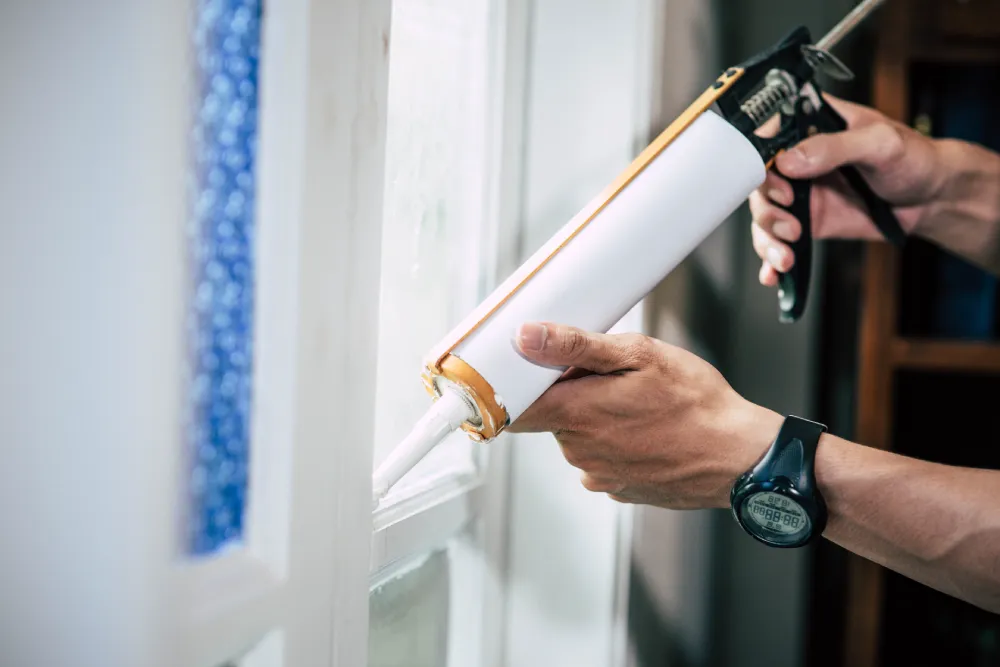
Window caulking is one of those home tasks people usually notice only when something goes wrong. A cold draft near the sofa. Water stains around the frame. Higher energy bills without a clear reason. Most of the time, the problem isn’t the window itself. It’s the seal around it.
This guide walks through how to get window caulking right so it actually lasts for years. It explains what to use, where to apply it, where to avoid it, and why small details make a big difference.
Why Sealing Windows Properly Matters More Than People Think
window caulking works quietly in the background. When it’s done right, it keeps air, water, dust, and noise where they belong. When it fails, problems build slowly and often stay hidden until repairs get expensive.
What proper sealing really does
- Keeps warm air inside during winter and blocks heat in summer
- Stops rainwater from creeping into walls
- Protects used wood window frames from rot
- Reduces strain on heating and cooling systems
- Helps rooms feel more comfortable year round
Many homes lose more energy through gaps than through glass. That’s why sealing matters as much as the window itself.
The Right Tools and Materials Make All the Difference
Window caulking doesn’t fail because people don’t try. It fails because the wrong products or shortcuts are used.
Basics that should always be on hand
- A solid caulk gun with smooth trigger control
- A scraper or knife to remove old material
- Alcohol or mild cleaner for surface prep
- Sealant for windows rated for outdoor use
- Outdoor silicone sealant for exposed areas
Good preparation is not optional. Sealant sticks best to clean, dry surfaces. Skipping this step shortens the life of the job more than anything else.
How to Caulk Windows Without Making a Mess
Knowing how to caulk windows isn’t about speed. It’s about control.
A simple, reliable approach
- Remove cracked or peeling material completely
- Clean the joint so nothing loose remains
- Cut the nozzle small to avoid overapplying
- Apply steady pressure, moving at a slow pace
- Smooth the bead right away before it skins
Rushing leads to uneven seals, gaps, and wasted product. A clean line always lasts longer.
Exterior Window Caulking Needs Extra Attention
Window caulking on the outside takes the most abuse. Sun, rain, wind, and temperature changes test the seal every day.
What helps exterior seals last
- Apply only in dry weather
- Avoid very cold or extremely hot days
- Use outdoor window caulking designed to stay flexible
- Let it cure fully before rain exposure
Exterior window caulking should bend with the building, not fight it. Rigid products crack faster outdoors.
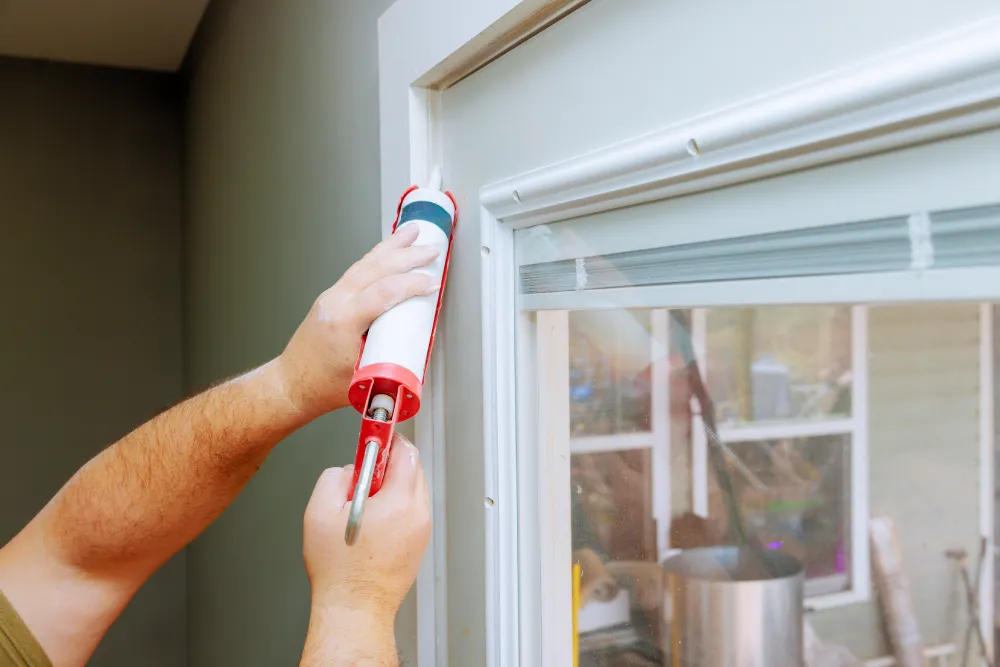
Caulking Outside Windows Without Causing Damage
One of the biggest mistakes with window caulking is sealing areas that were meant to stay open.
Areas that should not be sealed
- Drainage or weep holes at the bottom of frames
- Designed ventilation gaps
- Certain overlaps in flashing systems
This is exactly why people search for where not to caulk around windows. Blocking drainage traps moisture, and trapped moisture causes rot.
Working With Used Wood Window Frames
Older wood frames behave differently than vinyl or aluminum.
What to keep in mind
- Wood expands and contracts more
- Old paint and debris must be removed
- Flexible sealant for windows works best
Window caulking on wood should allow movement. When it doesn’t, cracks form and water finds its way in.
Choosing the Best Caulk for Windows
Not all products are meant for the same job. The best caulk for windows depends on where it’s used.
| Area | Product Type | Why it Works |
| Interior | Acrylic latex | Paintable and easy to apply |
| Exterior | Silicone hybrid | Strong weather resistance |
| High movement | Outdoor silicone sealant | Handles expansion well |
| Commercial use | Professional sealant | Built for scale and stress |
Sealant for windows should always match exposure and movement, not just price.
Caulking Windows for Winter Comfort
Window caulking before cold weather arrives makes a noticeable difference.
Winter benefits
- Reduces cold drafts near frames
- Helps prevent condensation on glass
- Keeps heating systems from overworking
Caulking windows for winter works best when done early, before temperatures drop too low for proper curing.
Residential vs Commercial Window Sealing
window caulking in homes and commercial buildings serves the same purpose but faces different demands.
Key differences
- Commercial window caulking covers larger areas
- Buildings move more due to size and structure
- Materials must handle long term stress
Commercial window caulking often requires higher grade products and experienced application to avoid widespread failure.
When a Window Caulking Service Makes Sense
Some jobs are better left to professionals.
Situations where help is worth it
- Multi story structures
- Large scale exterior work
- Historic or fragile materials
A window caulking service brings access equipment, proper materials, and experience that reduces costly mistakes.
Mistakes That Shorten the Life of Seals
Many failures happen for the same reasons.
Common problems
- Applying over dirt or moisture
- Using indoor products outdoors
- Sealing drainage paths
- Applying uneven or rushed beads
Avoiding these keeps window caulking effective for years instead of months.
Conclusion:
Window caulking is not about perfection. It’s about understanding movement, moisture, and timing. With proper prep, the right materials, and patience, window seals can stay intact for a long time. Small efforts here prevent bigger repairs later.
Frequently Asked Questions
How long does window caulking usually last?
Quality materials applied correctly can last five to ten years. Climate, sun exposure, and building movement all influence how long seals remain effective.
What causes window seals to fail early?
Early failure usually comes from poor surface preparation, using the wrong product, or sealing during bad weather conditions that prevent proper curing.
Is silicone always the best choice?
Silicone performs best outdoors due to flexibility and water resistance. Indoors, paintable acrylic options are often more practical and visually cleaner.
Should old caulk always be removed?
Yes. New material bonds poorly to old, failing sealant. Removing it ensures proper adhesion and prevents trapped moisture problems.
Can sealing windows lower energy bills?
Yes. Reducing air leakage helps heating and cooling systems work more efficiently, which often leads to noticeable energy savings over time.
What weather is best for applying sealant?
Dry, mild temperatures work best. Extreme heat or cold interferes with curing and adhesion, reducing long term performance.
Is it possible to over-caulk windows?
Yes. Sealing drainage or ventilation points can trap water, leading to hidden structural damage that becomes expensive to repair.
How can exterior seals be checked?
Look for cracks, shrinking, or gaps around frames. Any separation between sealant and surface means it’s time for repair.
Do all windows need exterior sealing?
Most do, but sealing must respect manufacturer design. Some areas are intentionally left open to manage moisture properly.
When is professional help recommended?
Large buildings, hard to reach areas, and older structures benefit from professional application to ensure durability and safety.